info@gensolar.in
 +91 93987 35165


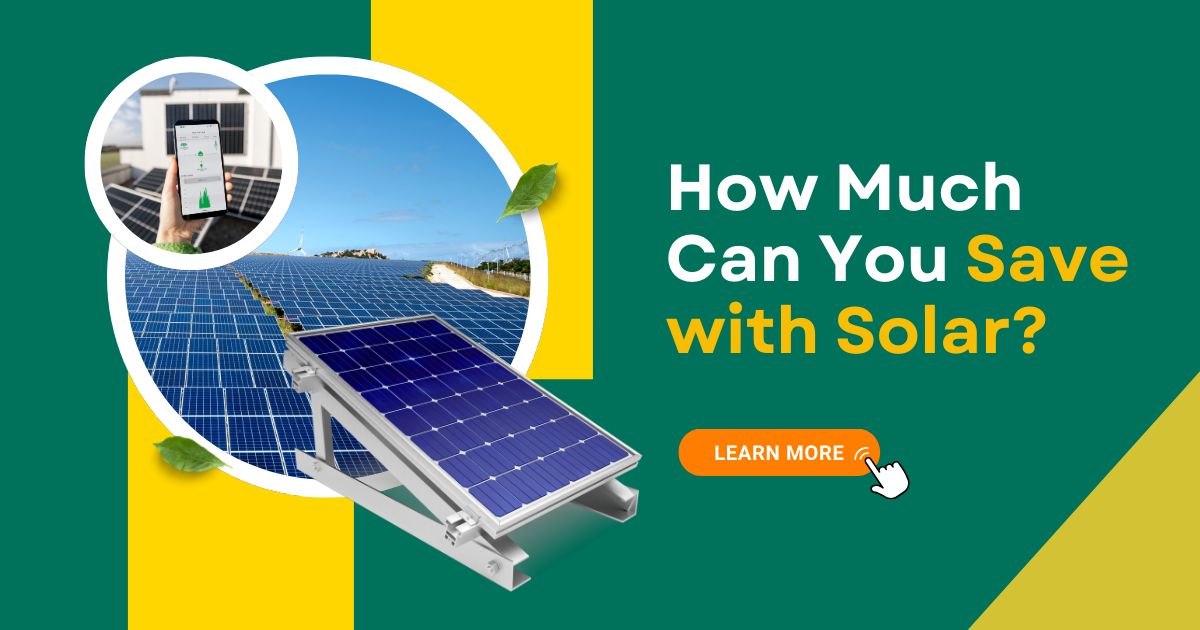
How Much Can You Really Save with Solar Panels?
Most individuals don't first inquire about solar panels in relationship to their technology or sustainability. They simply want to know the answer to one question: Is this going to save me money?
In short, yes, but the longer answer relies on a few factors as well: How much energy are you currently consuming? How long will you be living in your home? And how much do you currently pay for your electricity?
While the savings provided by solar systems are real, they are not the same for everyone.
To begin to know how much you might potentially save, look at your current monthly electricity bill. Your bill is the most straightforward and simple way of estimating your potential savings. Higher-consuming homes will generally see the greatest benefits from installing a solar system because of the many energy-consuming appliances and devices that we all use at home: air conditioners, water heaters, washing machines, televisions, computers, etc. Many homeowners report that their electricity usage dropped by approximately 50% to 80% after installing a solar system. During the summer months, some homeowners report paying next to nothing for their electricity bill. The savings you will see from your solar system are money that you have already been spending for quite some time. All the solar does is allow you to spend much less of that money than you used to with traditional electricity.
Solar Savings Build Over Time
Solar panels are not about instant results. They are a long term investment. In most cases, the installation cost is recovered within five to eight years. After that point, the electricity produced by your system costs you almost nothing.
Since solar panels typically last 25 years or more, this leaves many years of reduced or nearly free electricity. As power prices increase over time, those savings become even more noticeable.
Rising Power Costs Work in Your Favor
Electricity prices rarely stay the same. Over the years, they tend to rise. When you install solar panels, you reduce your dependence on the grid. This protects you from future price increases and gives you more control over your energy expenses.
Instead of adjusting your budget to higher bills each year, your energy costs remain far more stable.
Government Incentives to Help Lower Solar Installation Costs
Many areas have financial incentives from the government that can help offset the initial cost of a solar installation (e.g., tax credits, grants, net metering). With net metering, you can send any unused energy back to the grid and receive credits for it. Therefore, when your solar system is not providing you with energy, it is still of value to you.
Long Term Investment Value of Solar Panels
There is very little maintenance required for solar panels because there are no moving components to wear out over time. Generally, just keeping the panels clean and routinely checked is sufficient to ensure that they operate efficiently.
The long-term cost of maintenance for these systems pales in comparison to the cost of constant electric bills over several decades.
Are Solar Panels Right for You?
The best candidate for solar panels is someone who is going to remain in their house for multiple years and has good sun exposure. If these conditions exist, then the combined savings on electricity and the additional value of the property should provide good financial justification to install solar panels.
Additionally, you will save money when you install solar panels and become less dependent on fossil fuels.
So how much can you really save with solar panels? For many people, the savings are steady, long lasting, and meaningful. Solar is not about quick promises. It is about lowering bills, protecting yourself from rising energy costs, and making a smart decision that continues to pay off year after year.
Solar does not just change how you get electricity. It changes how much you pay for it in the long run.