info@gensolar.in
 +91 93987 35165


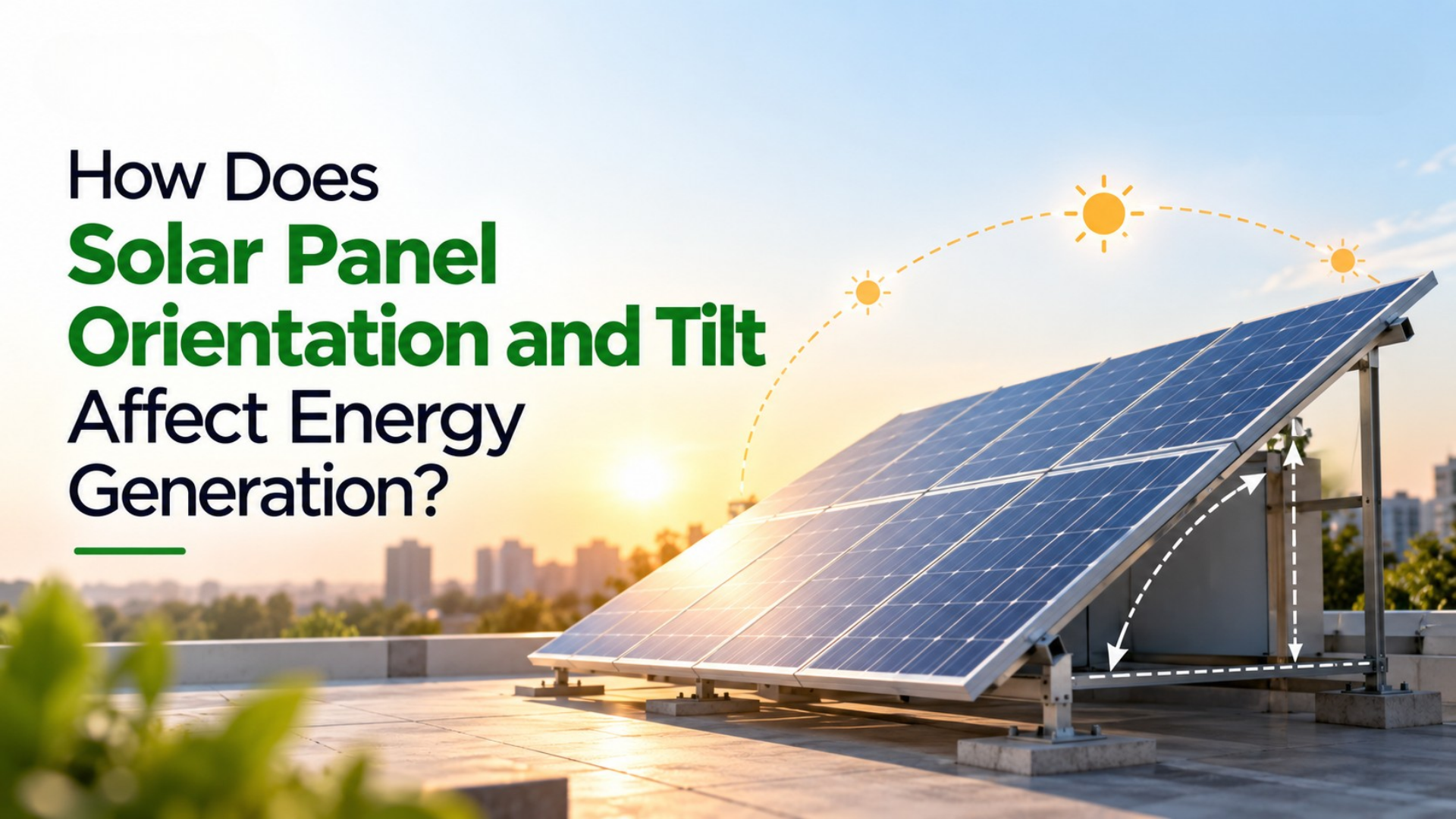
How Does Solar Panel Orientation and Tilt Affect Energy Generation?
Sunlight is required by solar panels to produce electricity, but the mere placement of solar panels in an open place does not ensure that they will produce electricity at their highest levels. There are certain factors which influence the production of energy from solar panels; one such factor is the orientation and angle at which solar panels are installed.
What Is Solar Panel Orientation?
Orientation implies that the solar panels are aligned towards a specific direction. The best direction varies according to the place of installation since the sun moves in a different way at various places and times of the year.
In India, solar panels are mostly oriented in the southern direction since this orientation can offer adequate sunlight exposure during the day in many areas. Nevertheless, the direction can vary according to the geographical place of installation, the shape of the roof, shading, and others.
An installation facing an orientation slightly deviated from the best one will still be able to generate adequate electricity. The impact depends on the distance of the deviation from the optimum and the availability of sunlight at the installation site.
What Is Solar Panel Tilt?
Tilt is the term used for describing the orientation of the solar panel relative to the horizontal plane. Tilt makes sure that the solar panel captures sunlight in a direct manner.
If the solar panel is flat, it can capture sunlight at particular intervals, but this can be impacted by the location of the sun. However, proper tilt helps in capturing sunlight over a longer period of time and throughout the day and the year.
Factors impacting proper tilt include latitude, season, roof configuration, and whether it is tracking or stationary.
Orientation and Tilt’s Role in Generating Energy
Solar panels produce more power as sunlight reaches the surface of these panels from a better angle. Poor orientation and tilt of the panels will cause sunlight to reach the surface of the solar panel from an unfavorable angle and thus reduce the amount of solar energy.
It is important to note that a solar panel does not have to point towards the optimal direction for it to function well since other factors have to be considered.
Shading Effect on Efficiency
Orientation and angle should be looked into along with shading effect. Even when the position is correct, shading from trees, buildings, water tanks or any other structures may cause energy production to drop.
The shadows may change depending on the time of day and season. Therefore, it is critical to carry out a check of the site at various times of the day.
Fixed Panels vs Solar Tracking
Fixed solar panels are mostly used in home and business installations because they are easier to install and maintain than any other type of solar panels. The tracking system helps to move solar panels as per the position of the sun, which increases exposure to the sunlight.
However, a tracking system is relatively complicated and may need further maintenance cost.
The orientation and tilting of the solar panels are very crucial in ensuring energy production. Correct orientation and tilting can be of great help in getting maximum exposure to the sun by the panels, while wrong orientation and tilting may cause a reduction in energy production.
The correct way of installing solar panels should take into account various factors including the location of the site, structure of the roof, shading, seasonality of sunlight among others. This can be achieved through professional site evaluation.