info@gensolar.in
 +91 93987 35165


How Does Solar Net Metering Work? A Simple Guide for Homeowners
The energy obtained from the sun enables the homeowner to use energy derived from solar power and be independent of grid electricity. The solar panels do not always produce an equal amount of electricity compared to the one used in the house. At daytime, there might be more production of electricity than consumption in the house, but at night, there will be a need for electricity to be drawn from the grid. Net metering is done through the measurement of electricity produced and used from the grid.
What Is Solar Net Metering?
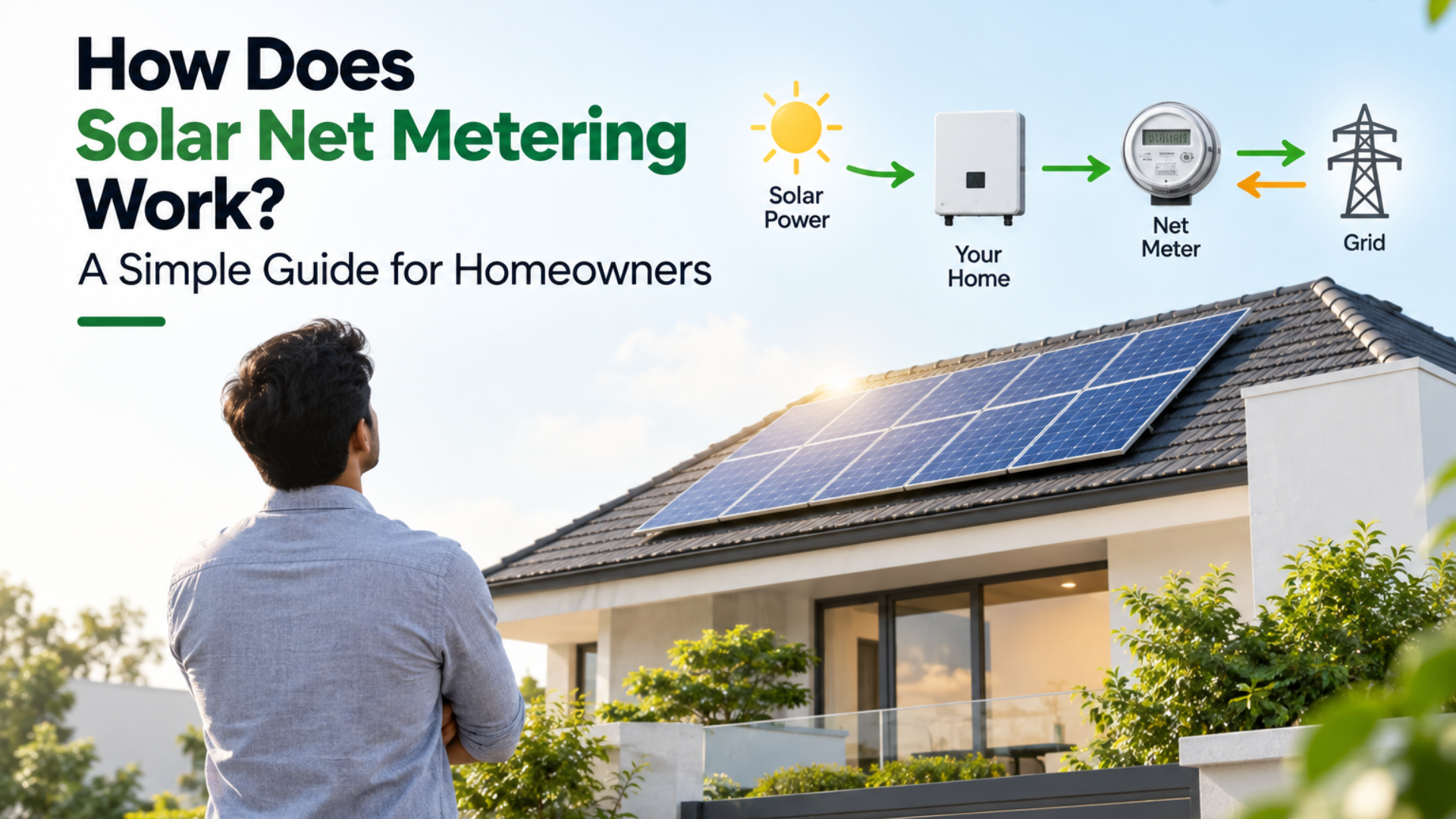
Net metering refers to a billing system for solar energy systems that are connected to the grid. The special electricity meter can measure power coming in both ways. That is, the meter calculates the amount of electricity you take from the electric grid and also the extra solar power fed into the electricity grid.
For instance, if the solar panels generate excess electricity compared to what your house uses during the day, you can feed the surplus electricity into the electric grid. And during times when your house requires excess electricity than what the solar panels generate, such as during nighttime, electricity can be taken from the grid.
Net Metering – How Does It Function?
It is a rather straightforward process:
1. Electricity is produced using solar panels
Electricity is produced with the help of the solar panels which you have installed on your roof. The inverter is used to transform the electricity into the required form.
2. The electricity that is produced is used by the electrical equipment
The electricity produced is used by the electrical equipment at your house like lights, air conditioners, refrigerators, etc.
3. Excess electricity goes to the power grid
If the solar energy system produces any excess electricity then this excess electricity goes to the power grid.
4. Electricity is brought in when needed
When the solar energy system fails to produce enough electricity then electricity is drawn from the power grid.
5. The meter records the energy imports and exports
At the end of the billing cycle, the electric power distribution firm computes the appropriate bill using the measured energy imports and exports based on the prevailing net-metering laws in that locality.
What Are the Advantages of Solar Net Metering?
The first advantage is that solar energy is utilized much more effectively since excess energy that could not be used during the day can now be fed back into the grid.
Also, one can save on electricity costs thanks to net metering because at least part of electricity usage will be covered by the energy generated by solar panels. It can help make rooftop solar systems feasible in houses with non-uniform electricity demands.
Additionally, another important advantage is convenience. Solar energy systems integrated into the grid will be able to switch from solar to regular energy sources depending on the situation.
Can All Homes Qualify for Net Metering?
Qualifications for net metering, applications, system capacity and billing may differ depending on the specific region and electrical distribution provider in your area. It is advisable to find out all relevant rules and conditions prior to installing a solar energy system on your roof.
Net metering for solar enables homeowners who have installed solar power systems in their homes to handle the imbalance between production and consumption of solar energy. The homeowner can use the produced solar energy in his/her home, while the excess will be fed into the grid and measured using the two-way meter.