info@gensolar.in
 +91 93987 35165


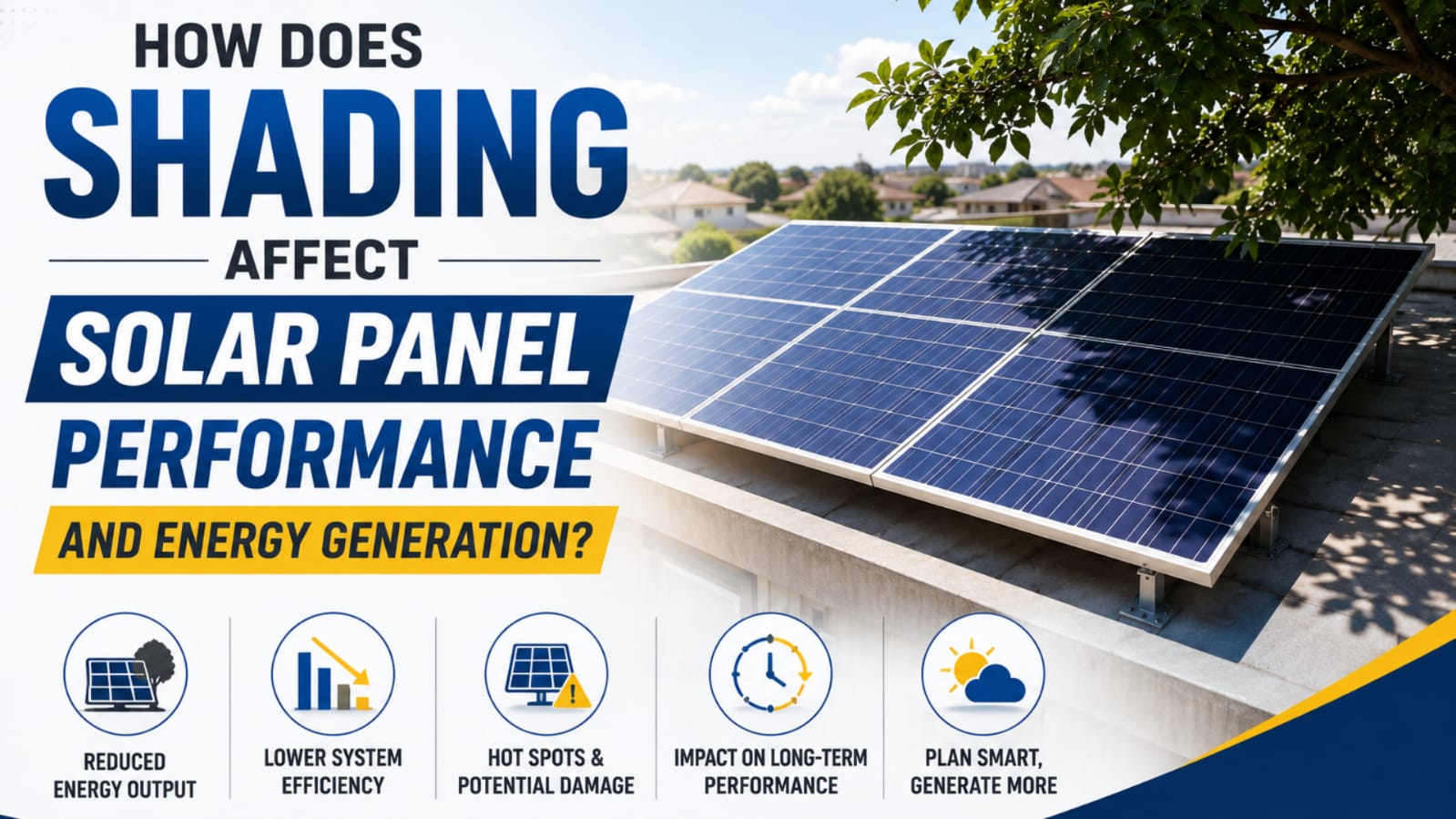
How Does Shading Affect Solar Panel Performance and Energy Generation?
In order to make use of the solar energy, the panels must be exposed to the rays from the sun. The reason behind this is that any obstruction of the sun's rays will definitely affect the process of making electricity.
Although shading may seem to be inconsequential at first, it has a big impact on the production of energy in general. Shading assessment is therefore an essential step in the process of installing the solar panels.
What Happens When Solar Panels Are Shaded?
The solar panels consist of many photovoltaic cells. The photovoltaic cells are able to transform light energy into electricity. If there are no obstacles that prevent light energy from reaching the photovoltaic cells, they will be able to produce electricity effectively.
In case the part of the solar panels gets shaded, less light energy reaches the cells, and thus they are not able to produce as much electricity. This depends on whether the cells are connected together.
As a consequence, even partial shading may lead to bigger loss of electricity production.
Common Causes of Shading
There can be various reasons for shading, depending upon the placement of the solar panels. These may include:
-
Trees and vegetation
-
Buildings or walls nearby
-
Water storage tanks or roof installations
-
Poles, chimneys, and other installations
-
Shadows cast by adjacent solar panels
-
Shadows cast by clouds and other temporary objects
As the position of the sun is also not the same throughout the day or across various seasons, so even if a solar panel is in direct sunlight at noon, it may have shade at other times of the day.
Shading Decrease in Solar Energy Generation
It is not possible to provide any universal percentage, as the number of lost units varies depending on the size of the shade, its duration, the area of the solar panel which is under the shade, as well as system design.
In case of light shadow and short shading periods, the effect may be insignificant. Yet, in case of frequent shading of several panels by trees or buildings within several hours each day, energy losses can become quite serious.
Modern photovoltaic systems use such technologies as bypass diodes, optimizers, and microinverters which allow mitigating effects of partial shading. Nevertheless, no system can generate electricity from totally shadowed sunlight.
How to Prevent Shading Issues?
Ideally, you should address issues with shading even before installing your PV system. The initial assessment of the installation area will allow finding objects blocking the rays and choosing the optimal location of the panels.
The positioning of panels has to take into account not only the path of the sun during the day but also the seasons. It is also important to consider trees and shrubs as they will gradually grow and cast additional shade on the panels.
In case shading cannot be completely eliminated, the proper electrical setup will help to reduce the impact of shading on the overall performance of the system.
Is Shading a Big Problem for Solar Installations?
Yes, especially when shading happens often or when several panels are affected by shading. A solar installation is a big investment, and even slight decrease in energy generation per day can become significant over a period of several years.
That is why the solar planning needs to go further than just having an available roof or area of land. It needs to consider how much sunlight hits the panels, their orientation, other structures on the premises, and future development at the site.
One of the elements that may affect the output of solar panels and electricity production is shading. Shading is caused by trees, buildings, rooftop obstructions, and other elements that decrease the amount of sunlight that hits the solar panels.
Proper assessment, placement, and design of the system will help to avoid such losses. As a result, owners of solar energy systems will be able to take advantage of the available sun exposure.