info@gensolar.in
 +91 93987 35165


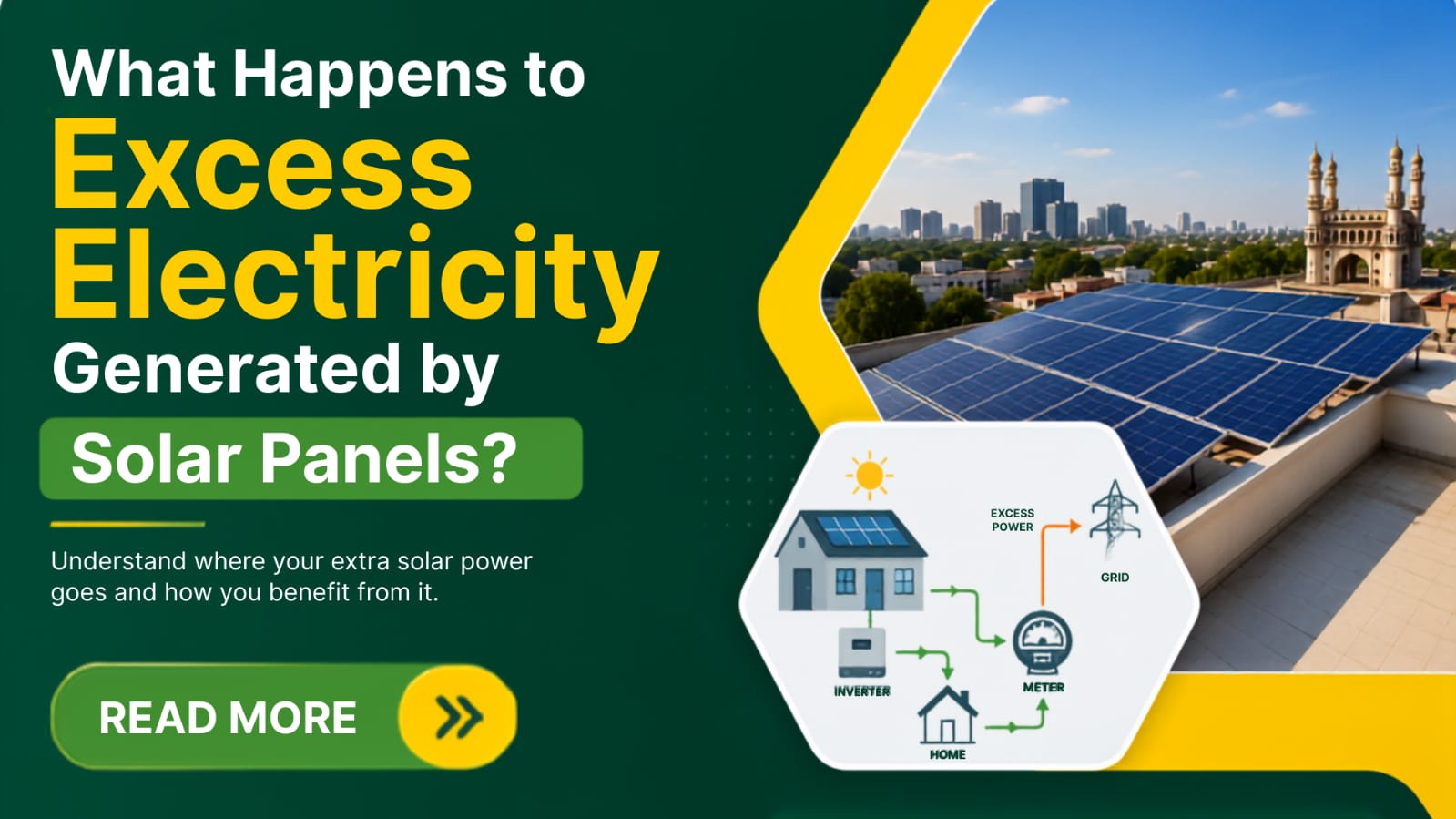
What Happens to Excess Electricity Generated by Solar Panels?
The solar panels are able to produce electricity anytime there is light from the sun. In the times when there is enough sunshine, the amount of electricity produced may be more than you actually need.
What happens to this excess electricity?
This will depend on the type of solar system that you have. This excess electricity can either be used for storage in the batteries, fed into the electricity grid, consumed by other devices or even not used at all.
Excess Solar Power Meaning
The excess solar power is defined as the total amount of electricity generated from the solar power beyond the amount that is used in the house.
For instance, in this case where one has 10kWh of electricity generated from the solar power and uses 6kWh in the house, the excess will be 4kWh.
1. Excess Electricity Can Be Sold to the Grid
In case of grid-connected PV solar systems, excess electricity can be sold to the electricity grid.
Dependent on the laws of electricity and agreements between electricity utilities, excess electricity is going to be sold using such methods as net metering or other settlement methods.
It means that even if your solar panels generate excess electricity during daytime, it can still be of use as your premises need not all of it.
2. Surplus Energy Can Be Stored Using Batterie
Surplus energy can also be stored using batteries as another method.
Any extra energy generated by the solar panels can be used for charging the battery. The electricity stored in it can be used later when there is little sun produced – for example, during nighttime.
Battery storage can also ensure the availability of backup energy during grid outages, subject to configuration.
3. Make Use of Excess Power during Day Time
Instead of selling excess energy, you can raise your usage of solar energy through the usage of flexible gadgets during sunny days.
For residences, the following are some of those:
-
Washing machines
-
Water heaters
-
Water pumps
-
Dishwashers
-
EV Charging
In business settings, other equipment that can be used to consume more solar energy is available.
4. Excess Power Might Get Curtail
If the battery gets fully charged and any extra power cannot be exported to the network, then the solar inverter may decide to lower solar energy production.
This practice is called curtailment. Although the solar panels have the ability to generate more energy, but the system will not let them do that due to the absence of demand or any storage facility or grid connection for that extra power.
What Happens in an Off-Grid Solar System?
In case of the off-grid system, the absence of the connection to the utility grid must be noted. The solar electricity is usually consumed for powering the loads and charging the battery bank.
When the batteries get completely charged and there are no extra loads, the solar generation is likely to be minimized. Hence, correct sizing of the solar panels, battery bank and electricity loads is essential.
The excess solar electricity does not have to be wasted. Depending on the specifics of the solar system, it might be sold to the utility grid, charged to the battery bank, used for extra loads or curtailed.
Choosing the appropriate size of the solar system, inverter and battery capacity can enable you to utilize the electricity produced from your solar panels more effectively.